SOLERA GUIDE
Fine Wine for Restaurants That Performs
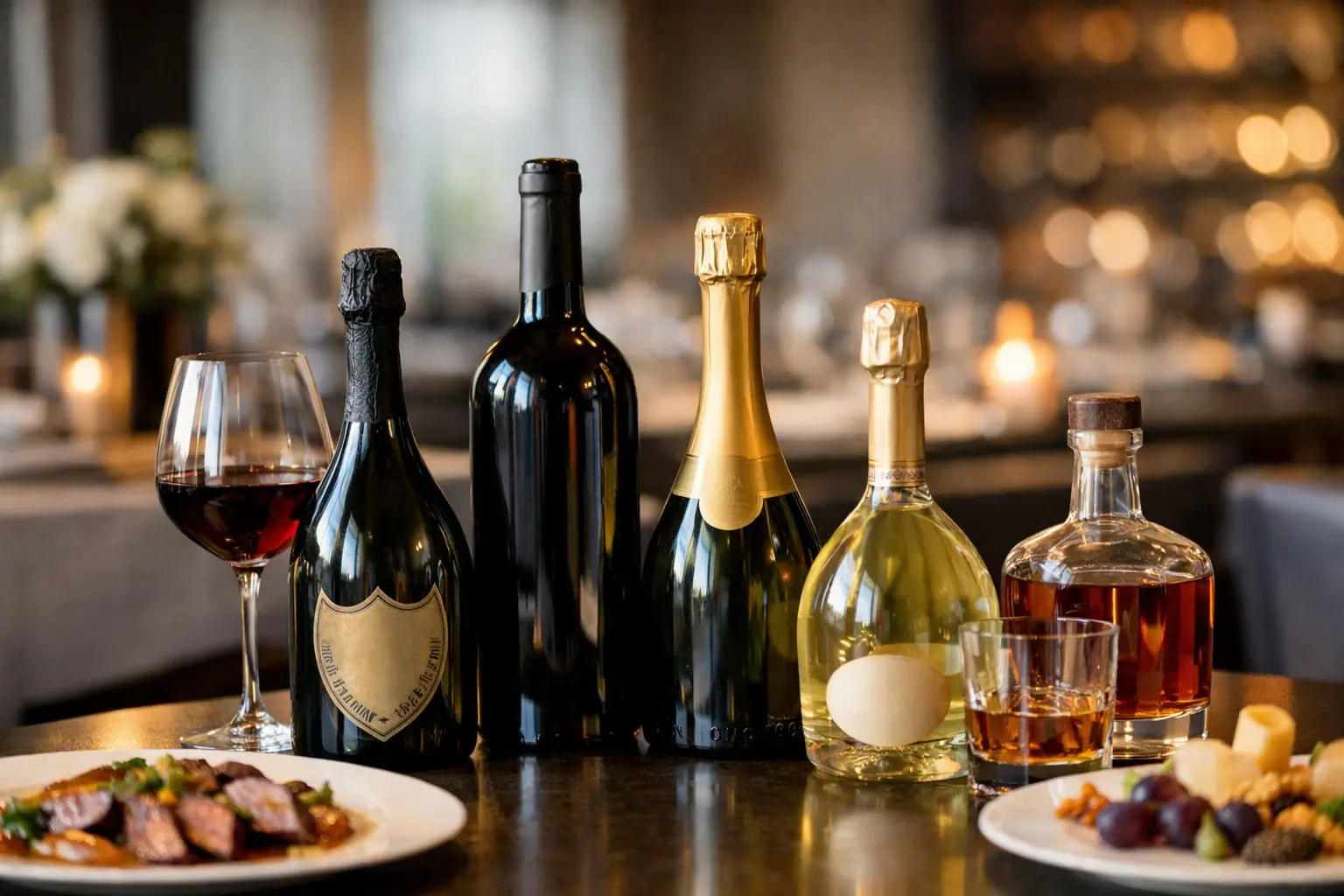
Fine wine for restaurants should balance guest appeal, margins, and supply certainty. Build a list with provenance, storage, and service in mind.
A restaurant wine list is not built on labels alone. It is built on availability, storage integrity, pricing discipline, and the confidence that the bottle poured tonight will match the standard promised on the list. That is why sourcing fine wine for restaurants requires more than good taste. It requires a merchant-level approach to stock, provenance, and service reliability.
For operators, the pressure is practical. A wine program has to support margin, fit the food, justify its place on the list, and remain consistently available enough to avoid constant reprinting and staff confusion. For higher-end venues, the standard rises further. Guests ordering premium Burgundy, Champagne, Bordeaux, or collector-grade bottles expect condition, authenticity, and proper handling. Anything less puts both revenue and reputation at risk.
What fine wine for restaurants really means
In a restaurant context, fine wine does not simply mean expensive wine. It refers to bottles with recognized quality, producer credibility, aging potential, or strong demand among informed buyers. That can include first-growth Bordeaux and prestige Champagne, but it can also include grower Champagne, top village Burgundy, mature Rioja, or serious Napa Cabernet if the list is built with a clear point of view.
The commercial test matters just as much as the product test. A fine wine earns its place when it adds value to the guest experience and remains operationally viable for the business. A bottle that impresses the sommelier but cannot be replenished, arrives with uncertain history, or ties up too much cash without turning is not automatically a smart restaurant buy.
This is where many lists drift off course. Buyers chase prestige but underestimate movement, service temperature, staff confidence, and replacement risk. A better approach is to treat fine wine as both a hospitality asset and an inventory decision.
Building a fine wine list for service, not just display
A strong restaurant list needs range, but it also needs purpose. The goal is not to show how many regions or famous producers you can name. The goal is to create a list that sells well across different guest types while protecting consistency.
Start with the role each section plays. Champagne and sparkling wines often carry more weight than operators first assume because they work across celebrations, aperitif orders, and pairing menus. They also signal seriousness. A well-chosen Champagne section, especially if it includes both recognizable houses and more distinctive grower options, can anchor the premium end of the list without overwhelming the buyer.
Bordeaux remains practically useful because many guests understand it, trust it, and are prepared to spend within the category. Burgundy can elevate the list, but it needs tighter control because pricing is volatile and allocations are often limited. Italian and Spanish fine wines can provide strong value, though they usually require more staff guidance to convert. The right balance depends on your cuisine, clientele, and average spend.
Depth is usually more valuable than excessive breadth. It is better to stock a smaller number of producers with enough quantity to support steady service than to scatter the budget across one-off bottles that disappear before the team learns how to sell them.
Provenance is not a detail - it is the foundation
For premium bottles, provenance affects both guest trust and actual wine quality. Restaurants that buy through vague channels or opportunistic sourcing may save money on paper, but the risk is obvious. Poor storage, uncertain transport history, inconsistent fill levels, damaged labels, or questionable authenticity can all turn a high-value sale into a complaint.
That risk is especially serious with Champagne, older Bordeaux, mature Burgundy, and collectible labels. These categories are highly sensitive to temperature history and handling. A professionally stored bottle from known stock is not the same thing as a bottle with an unclear past, even if the front label looks identical.
For trade buyers, merchant-owned inventory matters. When the supplier physically holds stock, storage standards and availability are easier to verify, and fulfillment is generally more predictable. That reduces the common problems restaurants face with broker-style supply: delayed allocation, substitutions, last-minute stockouts, and uncertainty around condition.
In practical terms, provenance should shape purchasing decisions as much as critic scores or producer reputation. If the supply chain is not clear, the wine is harder to stand behind on the floor.
Margin, movement, and the reality of list engineering
Fine wine has a margin story, but not a simple one. The highest-priced bottle on the list does not always produce the best return. Some premium wines are strong because they turn regularly and attract profitable table behavior, including larger food orders and additional bottles. Others sit for months, absorb storage space, and create cash drag.
Restaurants do better when they segment the list by how guests actually buy. There should be entry points into premium drinking, not only trophy bottles. Guests may be willing to step up from standard pours to a serious village Burgundy or a non-vintage prestige Champagne if the choice feels confident and clear. That middle premium zone often drives more consistent revenue than the ultra-rare end of the cellar.
The top tier still has a role. It sets tone, supports brand positioning, and can produce meaningful one-table revenue. But it works best when backed by a list structure that creates progression. If every premium option feels like a major leap, many guests will stop at the familiar lower tier.
Vintage variation also matters. Fine wine buyers in restaurants sometimes over-focus on famous years and under-focus on drinkability and price resistance. The best commercial vintage is not always the one with the most headlines. It may be the one that offers recognizable producer quality at a price guests will accept now.
Why supply consistency matters more than most buyers expect
A restaurant team cannot sell with confidence if the list changes by accident. When a bottle is printed, recommended by staff, and then repeatedly unavailable, the guest experience weakens. Fine wine service depends on trust, and trust depends on supply discipline.
This is one reason serious operators value suppliers with real stock and fast local fulfillment. In Hong Kong, where service expectations are high and buying windows can be tight, immediate availability can make a material difference. A restaurant may need to replenish before dinner service, support a private room booking, or secure a specific label for a returning regular. The supplier that can confirm stock clearly and fulfill quickly becomes more than a vendor. It becomes part of the operating model.
Solera’s approach is relevant here because it is based on held inventory, storage control, and direct fulfillment rather than a marketplace-style relay. For restaurants buying fine bottles, that distinction reduces uncertainty where it matters most.
Choosing suppliers for fine wine for restaurants
Price always matters, but it should not be the first filter. A lower headline cost can become expensive if it comes with weak stock visibility, inconsistent bottle condition, or slow replacement times. Restaurant buyers need suppliers who can answer basic commercial questions without ambiguity: Is the wine physically in stock, how has it been stored, what quantity is available, and how quickly can it be delivered?
Category strength also matters. If a supplier has real depth in Champagne, for example, that can help a restaurant build a more credible and resilient program than sourcing one or two labels from a generalist. The same is true for collector-grade Bordeaux, mature vintages, or sought-after spirits where list curation overlaps with luxury positioning.
Payment flexibility may also influence supplier value, particularly for hospitality groups managing multiple venues or event-driven demand. So can pickup options, replacement speed, and the ability to support both daily service and special orders. These are not secondary concerns. They shape how efficiently a restaurant can convert purchasing into revenue.
A smarter standard for restaurant buying
The best fine wine programs are disciplined, not decorative. They combine bottles guests want to drink with stock that can be supplied confidently and served without hesitation. Prestige has a place, but only when it is supported by provenance, proper storage, and reliable replenishment.
Restaurants that buy this way usually end up with better lists and fewer avoidable problems. They spend less time chasing missing stock, explaining substitutions, or worrying about bottle history. They spend more time selling wines that fit the room, support the food, and justify their place on the list.
That is the useful standard to keep in mind: fine wine should elevate the guest experience, but it should also make operational sense. When both conditions are met, the list starts working harder for the business every night.
Related Solera links: Mascot 2012 750mL · Mascot 2016 750mL · Olivier Leflaive Les Setilles 2022 750mL · Olivier Leflaive Montagny Bonneveaux 2020 750mL · Ramonet Montrachet 2004 750mL
Need help choosing the right bottle?
Solera can help you choose from current Hong Kong stock with practical pickup, delivery and bottle-specific advice.

 and then Add to Home Screen.
