SOLERA GUIDE
What Makes Krug Champagne So Great?
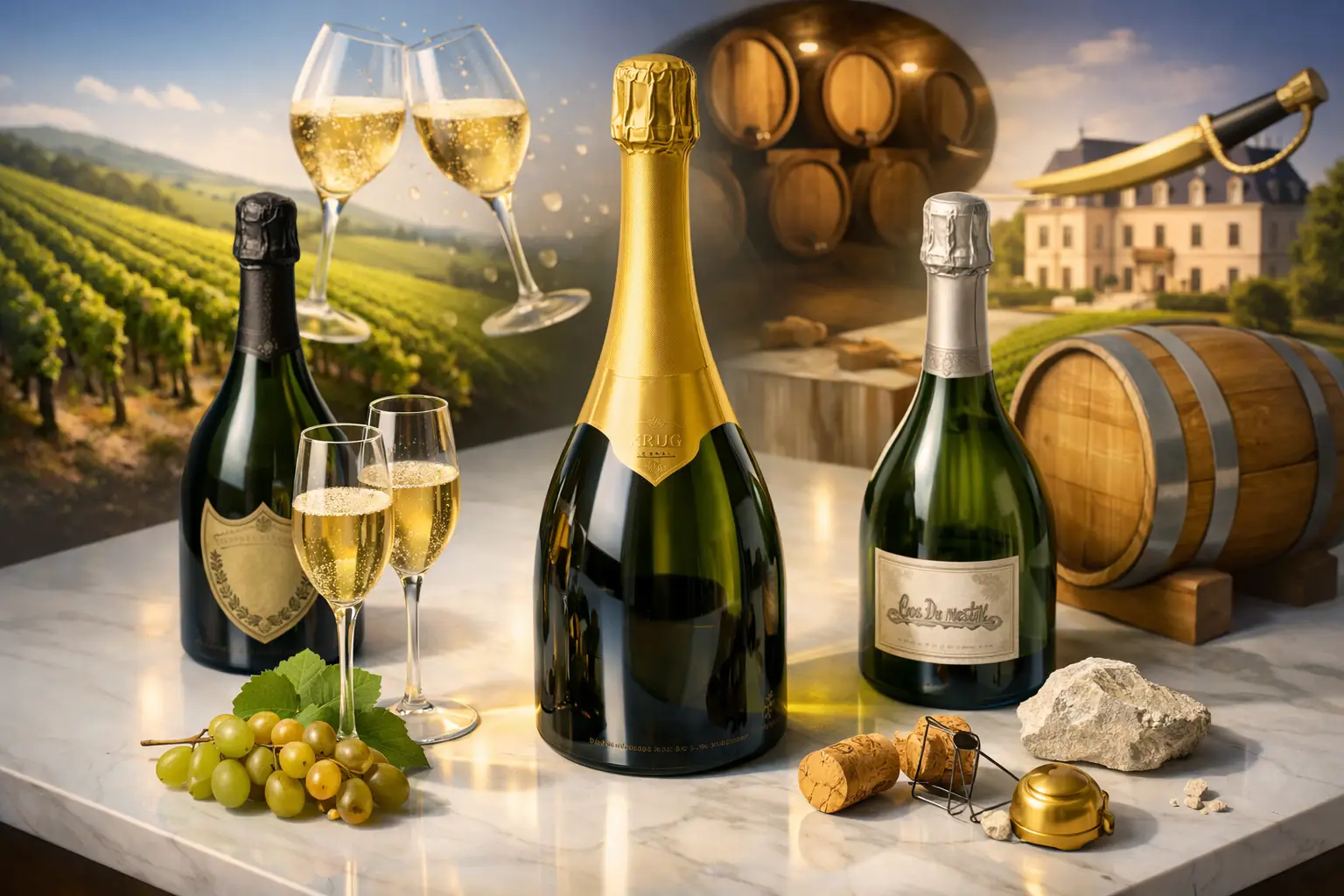
What makes Krug Champagne so great? From blending depth to cellar aging and consistency, here is why collectors and buyers rate it so highly.
If you have ever compared Krug side by side with other prestige Champagne, the question becomes practical rather than romantic: what makes Krug Champagne so great? The short answer is not branding alone. Krug earns its reputation through a combination of obsessive blending, long aging, reserve wine depth, and a house style that prioritizes fullness, complexity, and consistency over fashion.
For serious buyers, that matters because prestige Champagne is not judged only by label recognition. It is judged by what is in the glass, how reliably the house delivers across releases, and whether the bottle justifies its price in a market where provenance and storage conditions can materially affect the experience.
What makes Krug Champagne so great in the first place?
Krug stands apart because it treats blending as the core creative act, not a technical step before release. Many Champagne houses aim for freshness, brightness, and broad accessibility. Krug aims for layered texture, aromatic depth, and a finish that keeps evolving after the first sip. That difference sounds subtle on paper, but in tasting terms it is obvious.
The house is particularly known for building Grande Cuvée from a large library of reserve wines drawn from many different vintages. That gives Krug a broader palette than producers working with a narrower set of base wines. The result is a non-vintage Champagne that often drinks with the scale, detail, and seriousness people expect from vintage prestige cuvées.
This is one reason experienced collectors respect Krug Grande Cuvée is not positioned as an entry point in the usual sense. It is the signature expression of the house, and it is built to show depth every year rather than simply reflect one harvest.
The blending philosophy is unusually demanding
Krug is often described as a house of individuality, but the real discipline is consistency through complexity. The wines used in the final blend are vinified separately by plot and character. That level of separation allows the cellar team to make more exact decisions later, but it also requires more work, more tasting, and more patience.
The practical effect is that Krug can build structure in layers. One component may bring citrus tension, another toast, another orchard fruit, another chalky grip. In lesser hands, that many pieces could feel busy or overworked. At Krug, the goal is integration. When it succeeds, the wine feels complete rather than assembled.
That is a key distinction. Great Champagne is not simply intense. It is composed. Krug's best bottles manage richness without heaviness and complexity without confusion.
Long cellar aging changes the texture
A major part of Krug's appeal is time. The wines spend extended periods aging in the cellar before release, which gives the house style its familiar breadth and detail. You see this in the mousse, in the savory notes, and in the way fruit and autolytic character knit together.
This is where price starts to make more sense. Time in the cellar is expensive. It ties up inventory, demands disciplined storage, and delays cash flow. For a merchant-minded buyer, that is not abstract romance. It is part of the production cost and part of what separates serious prestige wine from branding-led luxury.
The payoff is texture. Krug often shows a fine, persistent bead and a palate that feels expansive without losing precision. Younger prestige Champagnes can impress with energy, but Krug tends to add depth and resonance that become especially clear with food or in a slower tasting.
Krug is rich, but not careless
One reason people either strongly prefer Krug or occasionally find it less immediate than other houses is its style. Krug is not trying to be the lightest, sharpest, or most delicate bottle on the table. It leans toward amplitude, biscuit, roasted nuts, spice, ripe citrus, and layered fruit. There is usually more bass than treble.
That richness is exactly what many collectors and hospitality buyers value. Krug performs well at the table because it can handle stronger textures and more developed flavors than slimmer, more linear Champagnes. It is often more convincing with poultry, mushroom dishes, aged cheese, or richer seafood preparations than bottles built purely around aperitif freshness.
The trade-off is simple. If someone wants a highly crystalline, razor-cut Blanc de Blancs style, Krug may not be their first choice. Greatness is not one-dimensional. Krug's greatness lies in authority, depth, and persistence, not minimalism.
Grande Cuvée is a serious benchmark
A lot of prestige in Champagne still revolves around vintage declarations. Krug took a different route by making Grande Cuvée the house's central statement. That matters because it shifts attention from harvest conditions to house craftsmanship.
For buyers, Grande Cuvée is often the clearest answer to what makes Krug Champagne so great. It shows the blending archive, the reserve wine strategy, the aging philosophy, and the stylistic identity in one bottle. It is not simply a standard non-vintage wine with premium positioning. It is the house's flagship method of expressing abundance and precision together.
This also gives Krug unusual reliability. Vintage wines can be fascinating because they reflect a specific year, but they also vary more. Grande Cuvée is designed to deliver the Krug signature across editions, which makes it a dependable purchase when the goal is known quality rather than vintage experimentation.
The single-vineyard wines add credibility
Krug's reputation is also strengthened by wines such as Clos du Mesnil and Clos d'Ambonnay. These are not high-volume prestige labels. They are highly specific, site-driven bottlings that show Krug can work at both ends of the spectrum: broad multi-vintage composition and exact single-site precision.
That matters because it proves the house is not relying on one formula. It can produce a monumental blended wine and also create tightly defined terroir expressions with collector appeal. For advanced buyers, that range adds confidence. It suggests the brand's prestige is backed by winemaking capability, not just market position.
Of course, these bottles are not everyday purchases, even for many collectors. Their rarity and pricing place them in a different category. But their existence reinforces the seriousness of the house and raises the profile of the broader range.
Why Krug performs so well in tastings and cellars
Krug tends to stand out in professional and enthusiast tastings because it is expressive early yet capable of further development. That is a valuable combination. Some Champagnes are charming on release but plateau quickly. Others need so much time that opening them young feels wasteful. Krug often offers pleasure now while still rewarding patient storage.
That said, bottle condition matters. With Champagne at this level, provenance is not a secondary issue. Heat exposure, poor transit, or unclear storage history can flatten aromatics and compromise texture. Buyers paying for Krug are paying for a world-class wine, but also for the expectation that the bottle has been physically handled and stored correctly.
This is why serious merchants focus on real stock control rather than vague sourcing. In a market such as Hong Kong, where logistics speed and storage standards directly affect premium wine quality, immediate availability only has value if inventory has been professionally kept from the start.
Price, reputation, and whether it is worth it
Krug is costly. That is obvious. The more useful question is whether the premium is justified.
For casual drinkers seeking only a recognizable luxury label, there are other Champagnes that may feel more cost-effective. For buyers who care about blending sophistication, aging, consistency, and cellar potential, Krug usually justifies its position better than many prestige names. It is one of the few houses where the technical and sensory arguments line up cleanly with the market reputation.
It is not immune to preference, though. Some drinkers will always favor the sharper profile of other prestige cuvées. Others may reserve Krug for food service, gifting, or cellar milestones rather than routine drinking. That does not weaken the case for quality. It simply means great wine still depends on context.
For hospitality buyers, Krug also carries practical strengths. It has strong guest recognition, serious by-the-bottle credibility, and enough internal character to justify hand-selling at the table. That is not true of every prestige Champagne with a high price tag.
So, what makes Krug Champagne so great?
It is the combination of decisions, not one magic feature. Krug takes blending further than most houses. It keeps a deep reserve wine library. It ages wines long enough to build real texture. It commits to a bold, full, complex style and delivers it with unusual consistency. Then it reinforces that reputation with site-specific wines that show genuine technical range.
For collectors and trade buyers, the appeal is straightforward. Krug is not great because it is expensive. It is expensive because the production model, time commitment, and stylistic ambition are all costly to execute well.
When buying a bottle at this level, the wine itself is only part of the equation. The other part is confidence that the bottle has been stored properly, held in real inventory, and delivered in the condition its reputation deserves. That is where the purchase becomes as important as the label. Choose carefully, and Krug will usually remind you why some Champagnes command loyalty that goes far beyond prestige.
Related Solera links: Krug 2008 750mL · Krug Grande Cuvee 164 750mL · Krug Grande Cuvee 168 750mL · Krug Grande Cuvee 169 750mL · Krug Grande Cuvee 170 1.5L
Need help choosing the right bottle?
Solera can help you choose from current Hong Kong stock with practical pickup, delivery and bottle-specific advice.

 and then Add to Home Screen.
