SOLERA GUIDE
Premium Bourbon Selection Guide
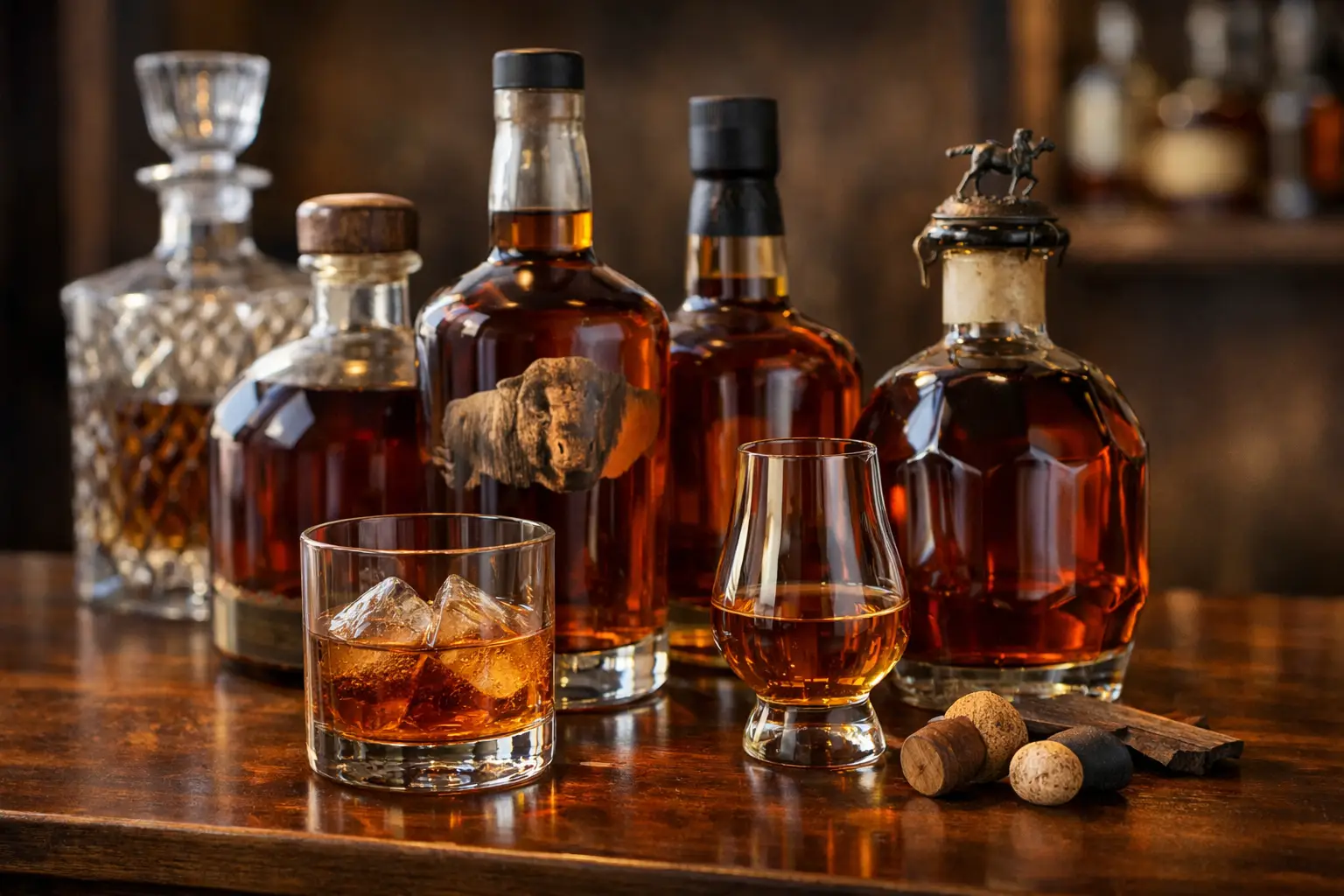
Use this premium bourbon selection guide to buy with more confidence, from mash bill and age to provenance, storage, rarity, and value.
A high-priced bourbon is not automatically a good buy. In the premium tier, the difference between a smart purchase and an expensive mistake often comes down to provenance, storage, and whether the bottle actually fits your purpose. This premium bourbon selection guide is built for buyers who want more than label recognition, whether the bottle is for drinking, gifting, cellar placement, or a hospitality program.
The premium bourbon market rewards informed selection. Some bottles command attention because they are genuinely scarce, well-made, and consistently handled. Others trade on hype, secondary market noise, or packaging. If you are buying above the everyday shelf, the right framework matters more than chasing whatever name appears most often online.
What defines a premium bourbon
Premium bourbon sits above standard retail not just because of price, but because of production quality, brand reputation, release structure, and market demand. In practical terms, this usually means older age statements, more selective barrel programs, limited releases, stronger brand equity, and tighter collector interest.
That said, premium does not always mean rare, and rare does not always mean better. A barrel proof bourbon from a respected house may offer more depth and character than an older bottle that has been priced mainly for scarcity. The key is to separate intrinsic quality from market heat.
For most buyers, premium bourbon falls into three broad groups. The first is established luxury bourbon with strong recognition, such as Pappy Van Winkle, Old Rip Van Winkle, and Weller in their more sought-after expressions. The second is high-quality modern premium bourbon that may be easier to source but still commands respect, including top releases from Russell's Reserve and other producer-led programs. The third is collectible bourbon, where condition, release year, packaging details, and storage history can matter as much as the liquid itself.
A premium bourbon selection guide for different buying goals
The right bottle depends on what the bottle needs to do. A collector, a gift buyer, and a bar manager may all shop the same category, but they should not use the same decision criteria.
If you are buying to drink, focus first on producer style, proof, and batch reputation. Some bourbons show best with power and structure, while others are polished and sweet from the start. Barrel proof releases can deliver concentration and complexity, but they also ask more from the drinker. Lower proof premium expressions may be more versatile and immediately expressive.
If you are buying as a gift, recognition matters more than niche appeal. A well-known label with strong presentation often lands better than an obscure bottle that only enthusiasts understand. In this case, the bottle's condition also matters. A clean label, proper fill level, sound closure, and original packaging can make a meaningful difference.
If you are buying for a cellar or collection, discipline matters. Focus on provenance, storage history, release specificity, and long-term desirability. A bottle with known stock history and professional storage is generally more attractive than one with an unclear chain of custody, even if both carry the same name.
If you are buying for trade or hospitality, the calculation shifts again. Consistency, supply reliability, and guest recognition become commercial concerns. A famous label may justify a list position or backbar placement, but only if supply is dependable and bottle condition is fit for service.
How to assess a bottle beyond the name
A strong brand name gets attention, but serious buying decisions should go further. Start with the producer's record. Some houses have built long-term trust by maintaining a clear style across releases. Others are more uneven, where one bottling is excellent and the next is carried mostly by branding.
Age statement is useful, but not absolute. Older bourbon can offer more oak, more polish, and a longer finish, but age can also flatten fruit and push a whiskey too far into wood. A 10 to 12 year bourbon from a strong producer may outperform a much older bottle depending on barrel selection and proof.
Mash bill and house style also deserve attention. Wheated bourbons, such as many expressions associated with Weller and Van Winkle, tend to present a softer, rounder profile with sweeter pastry notes. Rye-forward bourbons often show more spice, structure, and edge. Neither is superior in every case. It depends on whether you value plushness or tension in the glass.
Proof matters more than many buyers expect. Higher proof bourbons can carry more texture and aromatic detail, but they also show more heat and often require time or dilution to fully reveal themselves. Lower proof expressions may feel more composed on first pour and can be better suited to gifting or restaurant service.
Provenance is not a detail in premium bourbon
At the premium end of the market, provenance is part of the product. It affects confidence, condition, and resale attractiveness. A bottle that has been physically stocked, properly stored, and handled by a merchant with inventory control is fundamentally different from a bottle sourced through unclear channels.
This is especially relevant for collectible labels. Bottles such as Pappy, Old Rip Van Winkle, and older Weller releases attract demand precisely because they are hard to replace. With that demand comes more risk around condition issues, storage problems, and questionable sourcing.
Look closely at fill level, capsule integrity, label condition, carton presence, and overall presentation. Heat exposure, poor storage, or rough transit may not always be visible at a glance, but condition clues usually tell part of the story. For collectors and premium gift buyers, professional storage and stock certainty are not optional extras. They are core buying criteria.
Price, rarity, and value do not always align
One of the biggest mistakes in premium bourbon buying is treating price as proof of merit. In reality, price may reflect several factors at once: age, scarcity, producer reputation, allocation pressure, or simple market hype.
That is why value should be judged in context. A bottle can be expensive and still represent fair value if it has lasting demand, strong provenance, and a track record of quality. A cheaper bottle can be poor value if it is overpriced relative to its actual drinking experience or collector relevance.
This is where comparison becomes useful. A buyer considering a famous wheated bourbon should also evaluate whether a top Russell's Reserve release or another respected limited bottling offers a better fit for the budget. If the goal is drinking quality, there are cases where the less hyped bottle wins. If the goal is gifting or collecting, label recognition may justify the premium.
The role of availability and fulfillment
Premium spirits buying is often slowed by uncertainty. A bottle appears available, but stock is not confirmed. Delivery timing is vague. Provenance details are thin. For serious buyers, that friction matters.
Immediate stock ownership and clear fulfillment are especially valuable when the bottle is time-sensitive, whether for a dinner, a client gift, a hospitality list update, or a collector purchase that depends on condition confidence. In markets such as Hong Kong, where speed and certainty influence buying behavior, a merchant model with real inventory can be a decisive advantage over marketplace-style listings.
For buyers who need dependable access to premium bourbon, Solera's inventory-based approach addresses a practical issue many merchants leave unresolved: the bottle is in stock, professionally stored, and available with clear fulfillment terms.
Common mistakes this premium bourbon selection guide can help you avoid
The first mistake is buying the story instead of the bottle. Prestige matters, but it should not replace due diligence. The second is ignoring storage and condition because the label is famous. The third is buying without a clear use case.
Another common error is assuming rarity guarantees appreciation or satisfaction. Some bottles are collectible because they are culturally prominent, not because they are the best value to drink. Others are less talked about but more compelling in the glass. Good buying comes from matching the bottle to the objective.
Finally, avoid overcommitting to one style. The buyer who only chases wheated icons may miss exceptional spice-driven bourbons. The buyer who only values barrel proof may overlook more restrained, elegant releases that perform better at the table or in a gift setting.
Choosing with more confidence
Premium bourbon rewards specificity. Know whether you are buying for drinking, gifting, service, or collecting. Check the producer's reputation, not just the headline bottle. Judge age, proof, and style together, not in isolation. And treat provenance as part of quality, not as back-office detail.
The best bottle is rarely the loudest one. It is the one that arrives exactly as represented, fits the purpose, and earns its place once the cork is opened or the bottle goes into the cellar.
Related Solera links: Pappy Van Winkle 20 Year NV 750mL · Pappy Van Winkle 15 Year 2012 750mL · Pappy Van Winkle 15 Year 2016 750mL · Pappy Van Winkle 20 Year 2011 750mL · Pappy Van Winkle 20 Year 2013 750mL
Need help choosing the right bottle?
Solera can help you choose from current Hong Kong stock with practical pickup, delivery and bottle-specific advice.

 and then Add to Home Screen.
